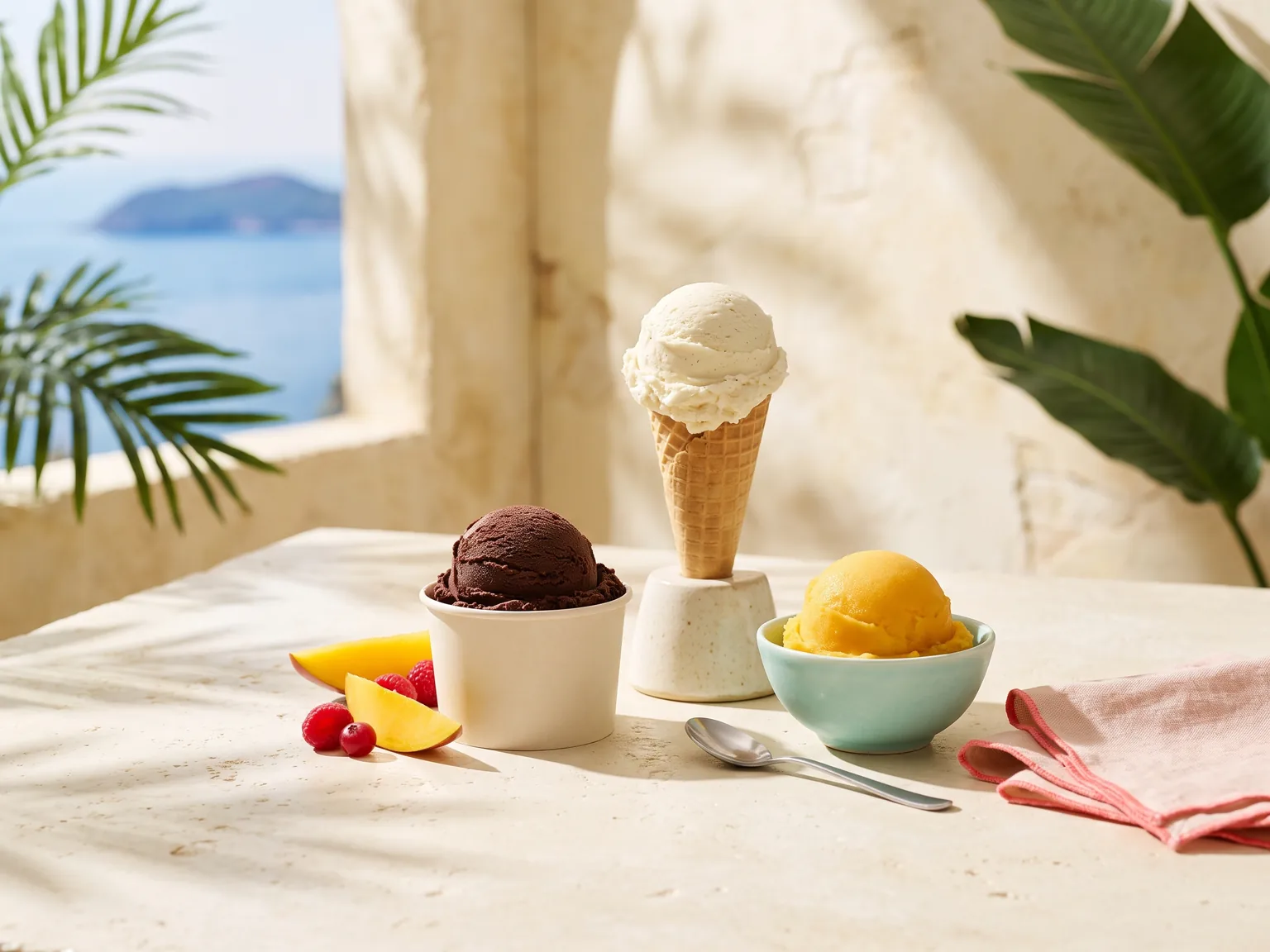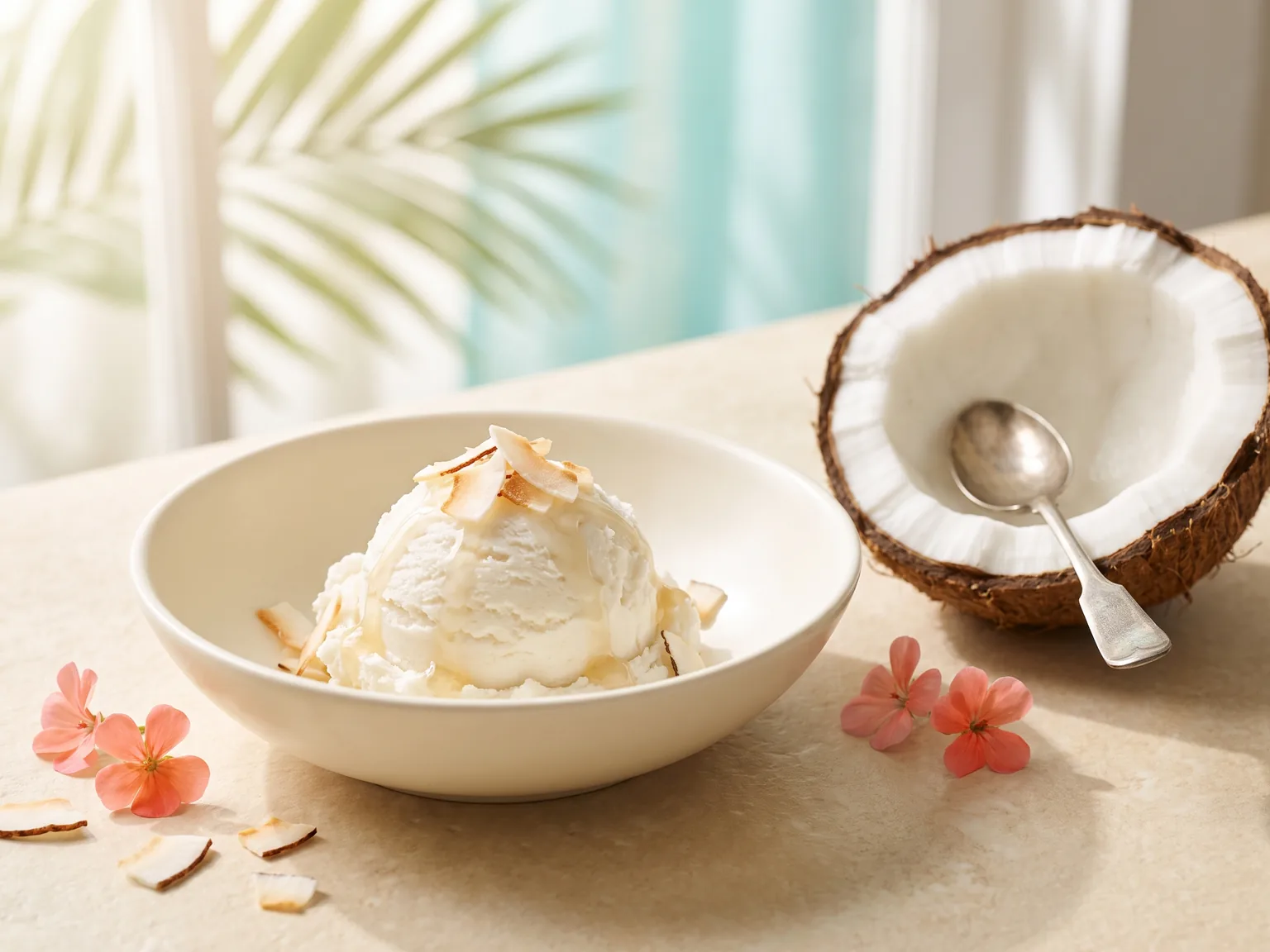

The flavour gets most of the attention, but the cup-or-cone decision changes how you eat your ice cream. A cone gives you a crisp finish to each mouthful. A cup gives you somewhere to put the spoon down and makes it easier to move between flavours. Neither is automatically the better choice: start with how you want to enjoy your serving.
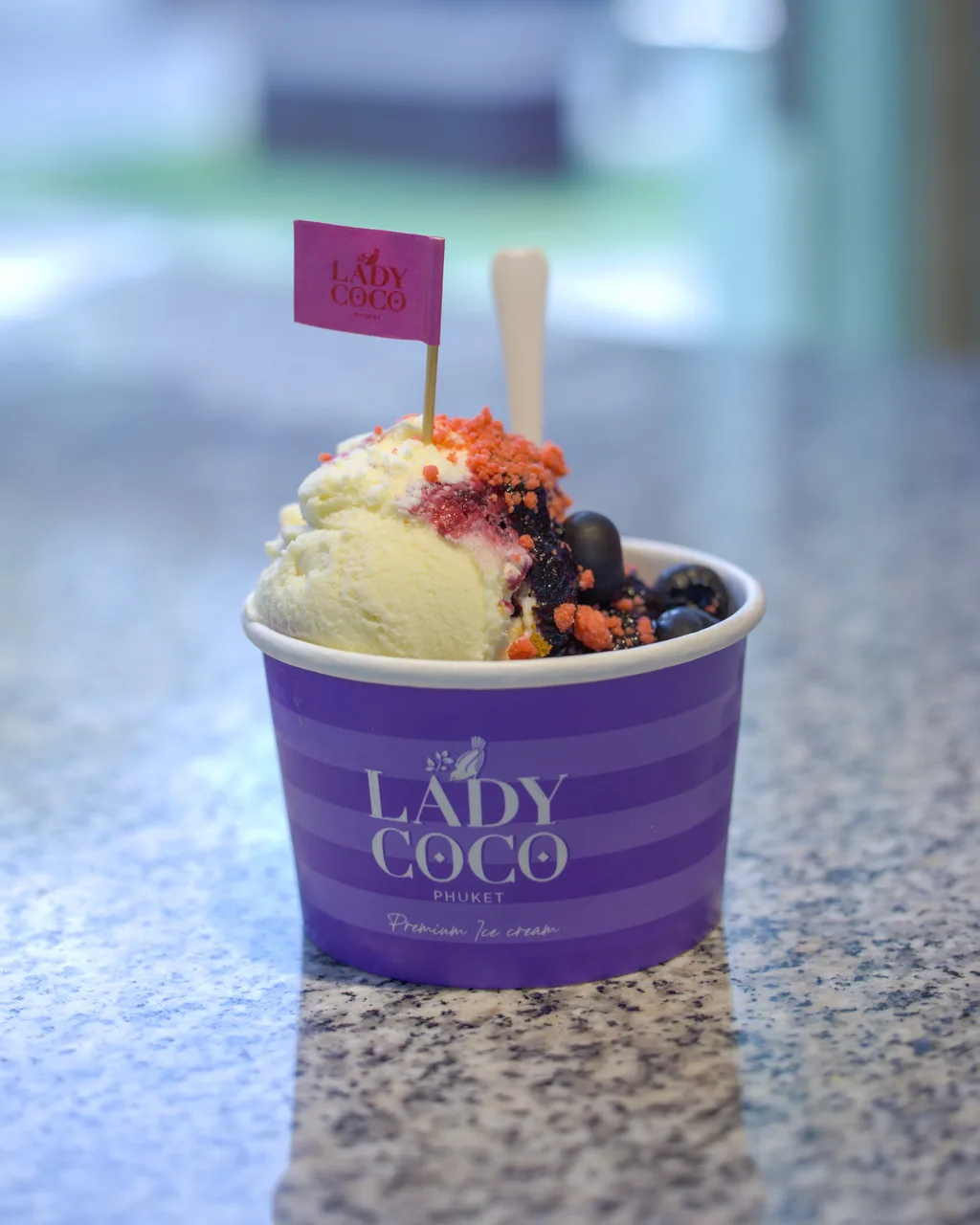
Lady Coco’s supplied photographs show both branded cups and cones. The available serving options, sizes and prices still need to be checked at your chosen counter. This guide is about choosing the format, rather than assuming every shop offers every combination pictured.
A cone makes the serving part of the dessert
Choose a cone when the cone itself is something you want to eat. It adds a different texture, and you can work your way from the scoop to the base without leaving a container of ice cream behind. If you usually enjoy the last bite as much as the first, that may settle the choice before you start looking at flavours.
A cone also asks for a little attention. You hold it upright, turn it as you eat and keep an eye on the edges of the scoop. That can be part of the pleasure when you are stopping for dessert. It can be less convenient when you are also managing a phone, shopping bags or someone else’s order.
Before ordering several scoops, ask which cone and serving combinations the counter offers. A tall cone in a photograph is a presentation example, not a size chart. Choose an amount you expect to enjoy comfortably rather than trying to reproduce a photo.

A cup gives you more control over each spoonful
A cup is worth considering if you like to eat slowly with a spoon or want to compare flavours separately. You can start with one side, move to another, then decide whether you prefer them together. It also gives you a container to set on a suitable table while you take a pause.
That does not mean a cup keeps ice cream frozen for a promised length of time. Treat either format as a dessert to enjoy after serving. For a journey or a later occasion, ask the team about an appropriate product and its handling instead of treating an ordinary counter serving as a transport solution.
If two people are deciding together, it can help to order individually. Each person can choose the format and amount that suits them. Sharing may sound simpler, but different flavour preferences and eating speeds can make separate servings more enjoyable.
Match the format to what you will be doing
- Sitting down for a proper break: either format can work. Pick the cone for its texture or the cup for spoonfuls you can arrange at your own pace.
- Carrying several things: decide where the bags and phone will go before ordering. A cup still needs a hand to hold it and another to use the spoon.
- Choosing for a child: consider how they prefer to eat, whether an adult will help and the size actually offered. A smaller, manageable serving may matter more than the format.
- Trying two flavours: a cup makes it easy to alternate between them; a cone appeals if you enjoy eating the layers as you go.
For a group order, settle the format and size before choosing flavours. It is easier to carry four manageable servings than to reorganise them once everyone has a dessert in hand.
Choose the flavour after the format
Once the serving feels right, narrow down the flavour. The Lady Coco collection separates signatures, classics and sorbets, so you can browse a smaller group instead of reading every name at once. Pick a familiar direction first, then ask what is available at the counter.
If you are adding a second flavour, decide whether you want something similar or a contrast. You do not need a complicated pairing formula. Think about the two flavours you would enjoy on their own, and ask the team to describe anything unfamiliar. A photo’s colour is not a reliable way to identify a scoop.
For a closer look at a specific choice, the Coconut guide and Phuket Pineapple guide cover those menu entries. They can help with flavour selection while this decision stays focused on the serving.

Ask about the complete serving when ingredients matter
The cup or cone is only one part of the order. If you need ingredient information, ask about the selected ice cream, the cone, any toppings and the handling of the complete serving. A flavour name or a photograph does not supply that information.
Choosing a cup does not, on its own, establish that the dessert meets a dietary requirement. Likewise, a fruit flavour does not identify every ingredient. The sorbet guide explains the menu’s dairy-free choices; bring any specific questions to the team before ordering.
Make the choice at your chosen counter
Use the shop directory to find the Lady Coco location that fits your route. Once there, three short questions are enough to start: which flavours are available, which cup or cone sizes can you choose, and what does the complete serving cost?
If you want the crunch, choose a cone. If you want to compare spoonfuls or set your dessert on a table, consider a cup. Either leaves the interesting decision ahead: which flavour to try first.