French-style ice cream is traditionally associated with a cooked custard base containing egg yolks; gelato is an Italian frozen-dessert tradition often associated with a milk-led recipe and dense texture. Both labels cover variations. Neither tells you a shop’s exact recipe, and neither is a reliable shortcut for deciding which dessert you will enjoy more.
At Lady Coco, the useful starting point is the brand’s own description: artisan French-style crème glacée, made in Phuket. That describes the approach, while the individual flavour and its ingredient information tell you what you are actually ordering. Here is how to understand the comparison without turning a pleasant scoop into a technical exam.
What “French-style” tells you
In classic cookery, French-style ice cream often begins with crème anglaise: a cooked mixture involving milk, sugar and egg yolks. The Alliance Française’s French vanilla explanation illustrates that custard tradition. Recipes can also include cream and different flavourings, so the phrase is a starting point rather than a complete formula.
It is useful to separate style from flavour. “French-style” does not mean that every scoop tastes of vanilla, nor does it mean the finished dessert was manufactured in France. Lady Coco’s collection includes chocolate, tropical fruit, caramel and many other flavour directions under a French-inspired identity.
It also does not establish whether a particular product contains eggs. A broad description of a culinary tradition is not a substitute for the current recipe. If that detail matters to you, ask about the specific flavour, including any pieces, sauces or serving extras.
How gelato fits into the picture
Penn State’s food-science explanation describes traditional gelato as generally using more milk relative to cream and less incorporated air than many American-style ice creams. It also stresses that products marketed as gelato can have different compositions. A dense ice cream and a gelato can therefore overlap in how they feel to eat.
That is why a simple “gelato is always this, ice cream is always that” rule can disappoint. The maker’s recipe and the particular flavour matter. A label gives you context; it cannot replace tasting or an accurate product description.
A comparison you can actually use
Typical tendencies, not universal specifications | ||
Question | French-style ice cream | Gelato |
|---|---|---|
What tradition does the name suggest? | Often a custard-based approach | An Italian frozen-dessert tradition |
What recipe detail is worth asking about? | Whether this flavour uses egg or dairy | The actual dairy base and other ingredients |
Can it feel dense and creamy? | Yes, depending on the recipe | Yes, commonly associated with the style |
Does the name prove dietary suitability? | No | No |
How should I choose? | By the flavour and texture you enjoy | By the flavour and texture you enjoy |
The comparison is most useful when it helps you ask a better question. “Is this a custard-style vanilla?” is more specific than “Is this premium?” “Does this fruit flavour contain milk?” is more useful than assuming that every fruit-coloured scoop is sorbet.
Look for the flavour experience you want
Imagine two people choosing dessert. One wants an uncomplicated vanilla flavour to enjoy on its own. The other wants chocolate with pieces and a more varied mouthful. The difference between their preferences may be more important than the style label on the counter. Start with what you want to taste, then use the menu to narrow the options.
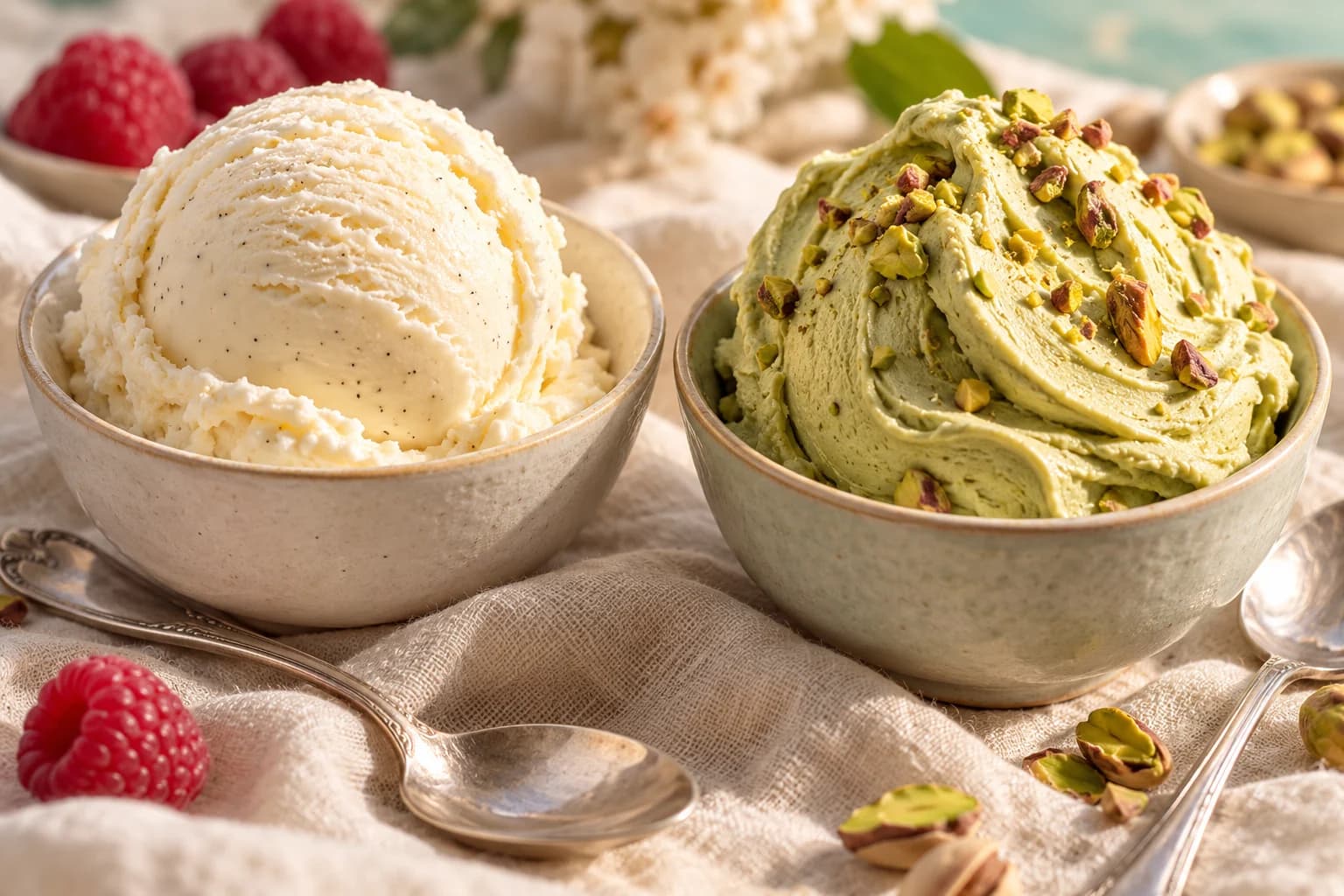
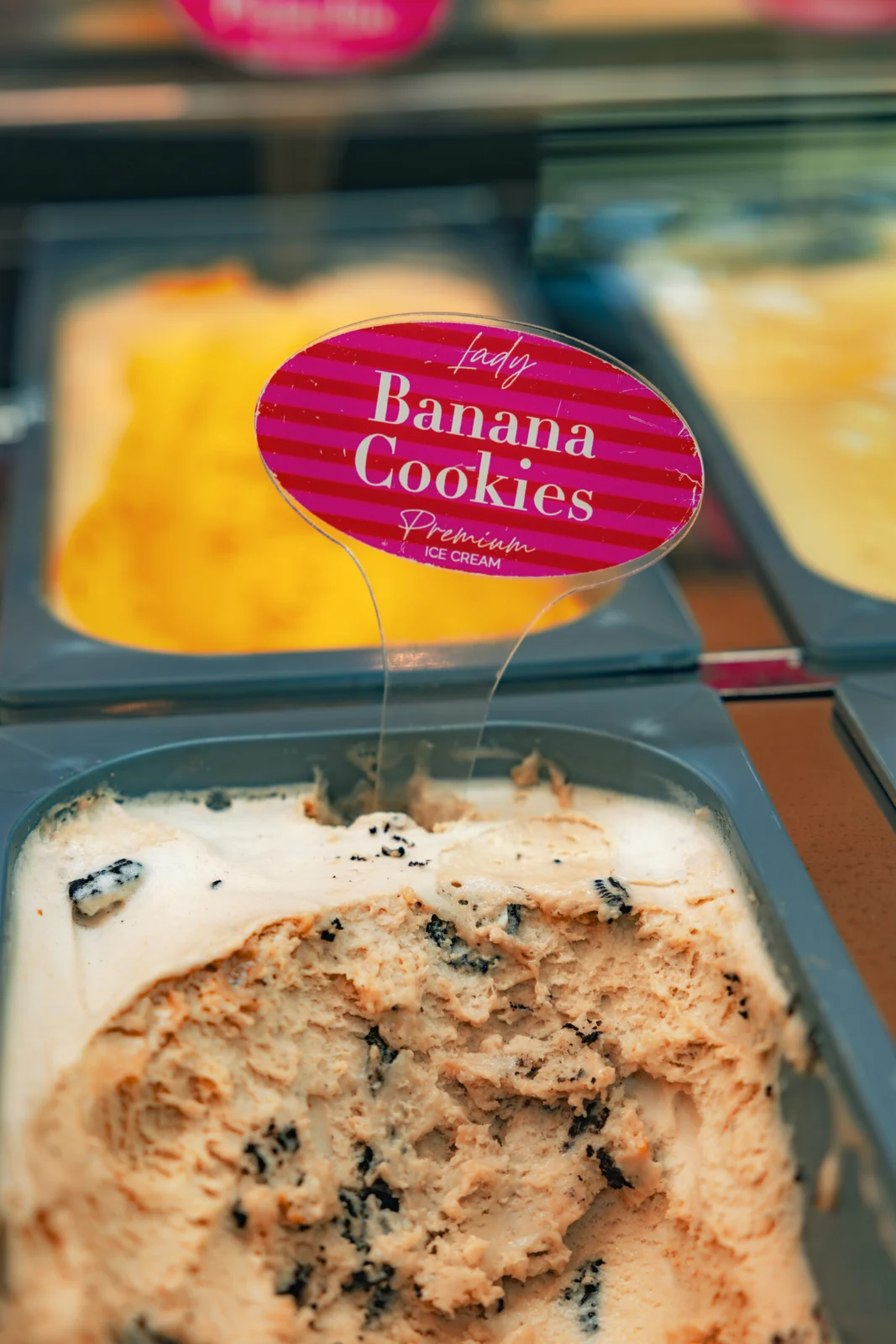
Lady Coco’s collection makes that approach easy. Vanilla Dream and Vanilla Madagascar sit alongside flavours such as Chocolate Brownie, Belgian Cookie Speculoos and Crème Brûlée. These names suggest different directions to investigate, but ask the team about the actual preparation rather than inferring every ingredient from the title.
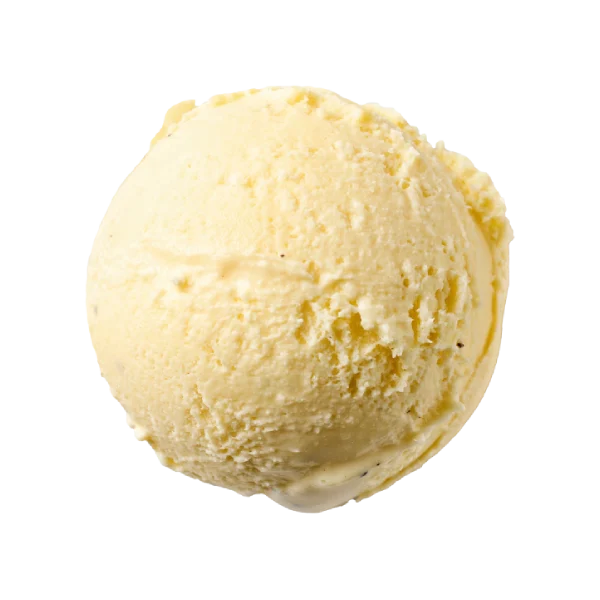
If you are comparing two products, try to compare like with like: a plain flavour against a plain flavour, rather than a heavily topped sundae against a simple scoop. Notice whether you enjoy the flavour itself, how the texture feels, and whether you would choose it again. Those observations are more useful than trying to award one entire culinary tradition a winning score.
Where sorbet belongs
Sorbet is a different branch of the frozen-dessert menu. Lady Coco lists its sorbets separately and identifies the range as dairy-free in the FAQ. That gives someone avoiding dairy a concrete collection to explore instead of asking whether French ice cream or gelato is “lighter.”
Our guide to dairy-free choices in Phuket covers the available flavour names and the questions to ask about serving. Neither a fruit ingredient nor a smooth-looking texture proves that an unverified product is dairy-free. Ask about the recipe you plan to order.
Three questions for your next visit
What flavour do I want? Choose a direction such as vanilla, chocolate, fruit or caramel before looking for technical labels.
What texture or format sounds good? A scoop, popsicle and sundae offer different experiences, even when their names share an ingredient.
What information matters to me? Ask about eggs, dairy, nuts or other ingredients before ordering if they affect your choice.
French ice cream and gelato: quick answers
Is Lady Coco an Italian gelato brand?
Lady Coco describes its ice cream as French-style crème glacée. That is the description used throughout its own site and collection.
Is one style automatically healthier?
No useful nutrition comparison can be made from the style name alone. Recipes and portions vary. This guide compares dessert styles rather than making nutrition claims about untested products.
Does French-style ice cream always contain egg?
The classic custard tradition uses egg yolks, but confirm the ingredients of the individual product. A style description cannot serve as an allergen statement.
Ready to make the comparison personal? Find a Lady Coco shop, choose a flavour that appeals, and enjoy the scoop in front of you.